
Manual Handling Training Durham. Why Is It Important in the UK Workplace?
Manual handling is part of everyday work in many UK businesses. Employees may lift boxes, move equipment, push trolleys, carry materials, handle deliveries or support people as part of their normal duties.
Although some manual handling tasks may appear simple, poorly planned or unsafe handling can increase the risk of injury. The UK’s Manual Handling Operations Regulations 1992 apply to activities involving transporting or supporting loads, including lifting, lowering, pushing, pulling, carrying and moving loads.
For employers, understanding manual handling risks and providing appropriate information, instruction and training can help create a safer workplace.
In this guide, we explain what manual handling means, the common risks, why training matters and how businesses can reduce the risk of workplace injuries.
Manual Handling Training Durham | What Is Manual Handling?
Manual handling generally refers to moving or supporting something by physical effort.
This can include:
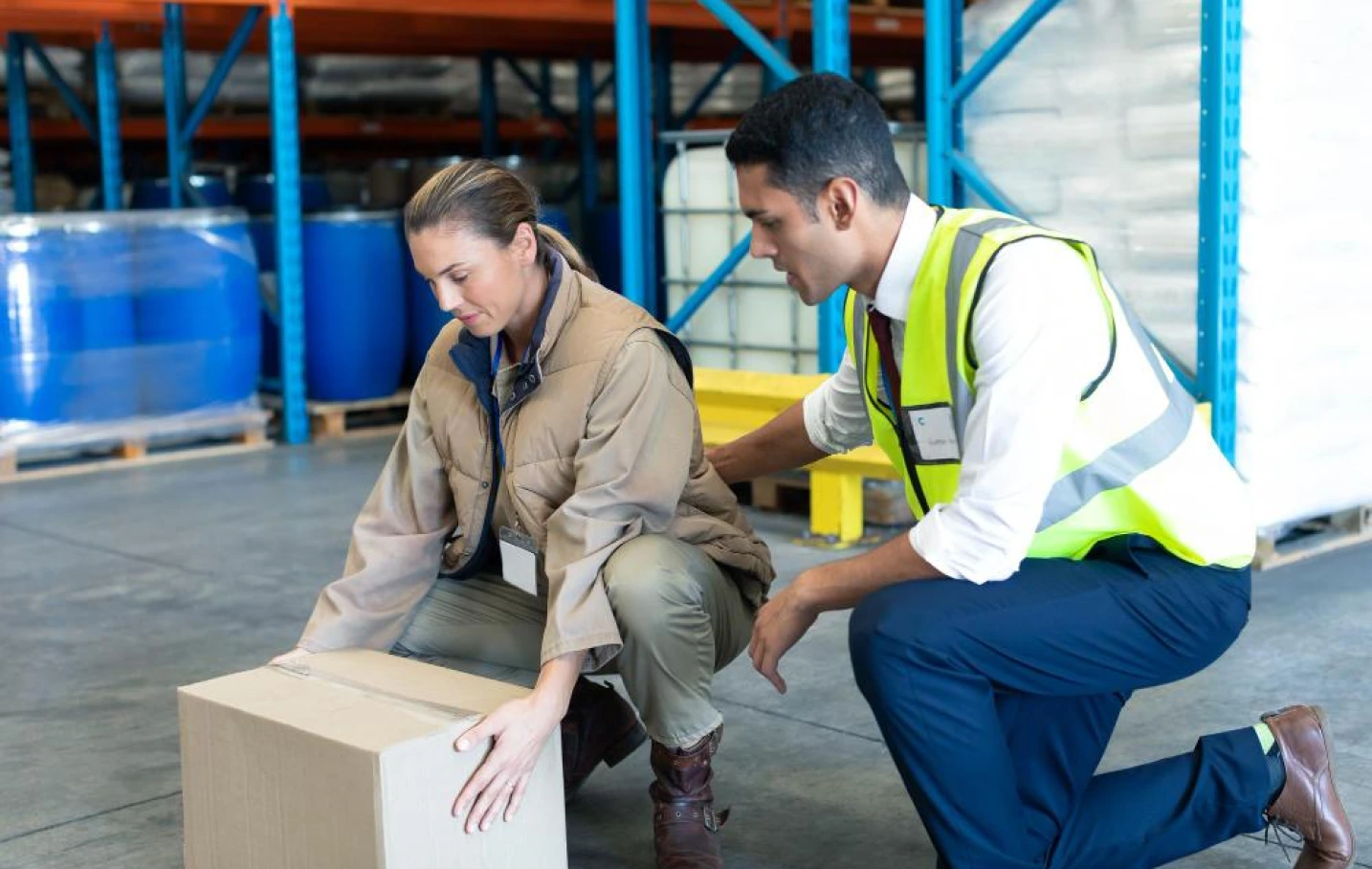
- Lifting a box
- Carrying equipment
- Lowering a load
- Pushing a trolley
- Pulling equipment
- Moving stock
- Loading or unloading deliveries
- Handling tools and materials
- Moving furniture
- Supporting or moving a person
Manual handling is not limited to warehouses or construction sites. HSE guidance notes that manual handling risks can occur across many workplaces, including offices, factories, farms, hospitals, laboratories, banks and delivery operations.
Why Is Manual Handling Training Important?
Manual handling training helps employees understand how to identify risks and carry out handling activities more safely.
Good training can help workers understand:
- Common causes of manual handling injuries
- How to identify hazards
- How to assess handling tasks
- Safe lifting and carrying principles
- Pushing and pulling techniques
- How to work as a team when handling loads
- When mechanical assistance may be appropriate
- Why workplace procedures matter
- How to report hazards and problems
Training should form part of a wider approach to controlling workplace risks rather than being treated as the only control measure.
What Are the Common Risks of Manual Handling?
Manual handling can create different types of risk depending on the task, load and working environment.
Common risk factors include:
Heavy Loads
Lifting or carrying heavy objects can place significant physical demands on the body.
Awkward Loads
Large, unstable or unusually shaped objects can be difficult to grip and control.
Repetitive Handling
Repeated lifting, carrying or other handling activities can contribute to physical strain.
Awkward Postures
Working in bent, twisted or stretched positions can increase the difficulty of a task.
Poor Working Environment
Limited space, uneven flooring, poor lighting or obstacles can make manual handling more difficult.
Pushing and Pulling
Moving trolleys, equipment or other loads can also create risks, particularly where the load is difficult to control.
HSE guidance recommends considering the task, individual, load and working environment when assessing manual handling risks.
Manual Handling Training Durham | Manual Handling Injuries in the Workplace
Poorly controlled manual handling can contribute to musculoskeletal problems and other injuries.
Potential problems can include:
- Back injuries
- Muscle strains
- Sprains
- Shoulder injuries
- Arm injuries
- Hand and wrist injuries
- Repetitive strain problems
Manual Handling Training Durham. Not every injury is caused by a single lifting incident. Repeated physical activities and unsuitable working conditions can also contribute to musculoskeletal disorders.
This is why businesses should consider the overall handling activity rather than focusing only on how heavy an individual load is.
What Does UK Law Say About Manual Handling?
The Manual Handling Operations Regulations 1992 set requirements for employers in relation to hazardous manual handling operations.
HSE guidance describes a hierarchy of measures for reducing risk:
- Avoid hazardous manual handling where reasonably practicable.
- Assess the risk where hazardous manual handling cannot be avoided.
- Reduce the risk so far as reasonably practicable.
Where possible, mechanical assistance can be used to reduce the need for manual handling. HSE gives examples such as sack trolleys and hoists.
This means that simply telling employees to “lift correctly” should not automatically be considered sufficient. Employers should first consider whether the hazardous handling task can be avoided or redesigned. Manual Handling Training Durham
How Can Businesses Reduce Manual Handling Risks?
There are several ways businesses can reduce manual handling risks.
1. Avoid Unnecessary Manual Handling
Ask whether the load needs to be moved manually at all.
Could the process be:
- Automated?
- Mechanised?
- Redesigned?
- Moved closer to the point of use?
- Completed using lifting equipment?
Reducing the amount of manual handling can reduce exposure to the associated risks.
2. Use Mechanical Assistance
Where appropriate, businesses can consider equipment such as:
- Trolleys
- Sack trucks
- Hoists
- Conveyors
- Lifting aids
- Pallet trucks
- Other suitable mechanical equipment
The appropriate equipment will depend on the task, load and workplace.
3. Assess the Task
A manual handling risk assessment should consider factors such as:
- The task
- The load
- The working environment
- Individual capabilities
- Frequency of handling
- Duration of the activity
- Pushing and pulling requirements
- Existing control measures
HSE provides assessment tools including the Manual Handling Assessment Charts (MAC) and Risk Assessment of Pushing and Pulling (RAPP) tools.
The TILE Approach to Manual Handling
A commonly used way of thinking about manual handling tasks is TILE:
T — Task
Consider what the worker has to do.
Ask:
- How far does the load need to be moved?
- Is lifting involved?
- Is pushing or pulling involved?
- Is the task repetitive?
- Does the worker need to twist or reach?
I — Individual
Consider the person performing the task.
Relevant factors can include:
- Training
- Experience
- Physical capability
- Knowledge of the task
- Any identified individual risks
L — Load
Consider the characteristics of the object.
For example:
- Weight
- Size
- Shape
- Stability
- Grip
- Contents
E — Environment
Consider the workplace conditions.
For example:
- Available space
- Flooring
- Lighting
- Temperature
- Obstacles
- Slopes
- Working height
TILE can be a useful framework for thinking about manual handling risks, but businesses should use appropriate risk assessment methods for their specific activities.
Manual Handling Training Durham | Safe Manual Handling Techniques
Training can help employees understand safer ways of approaching handling tasks.
Depending on the activity, good practice may include:
- Planning the movement before starting
- Checking the route
- Removing obstacles
- Positioning the load safely
- Keeping a stable stance
- Maintaining control of the load
- Avoiding unnecessary twisting
- Using suitable handling equipment
- Asking for assistance when appropriate
- Using team handling where required
- Following workplace procedures
The correct technique will depend on the load and task. There is no single lifting technique that is suitable for every situation.
Why Risk Assessment Matters
Manual handling should be considered as part of the wider workplace risk assessment process.
A risk assessment can help employers identify:
- What could cause injury
- Who may be affected
- How the risk can be controlled
- Whether additional equipment is needed
- Whether the task can be redesigned
- Whether employees need additional instruction or training
HSE guidance states that employers should make a suitable and sufficient assessment of hazardous manual handling operations that cannot be avoided.
Manual Handling Training for Different Industries
Manual handling training can be relevant to many sectors.
Construction
Workers may need to move:
- Building materials
- Tools
- Equipment
- Timber
- Components
Warehousing
Employees may regularly handle:
- Boxes
- Stock
- Packages
- Pallets
- Deliveries
Hospitality
Staff may move:
- Food supplies
- Furniture
- Equipment
- Catering products
Healthcare and Care
Workers may need to consider safe moving and handling practices when supporting people or moving equipment. Manual Handling Training Durham
Retail
Employees may handle:
- Deliveries
- Stock
- Display equipment
- Boxes
Manual Handling Training Durham. The risks and required controls will vary according to the actual work being carried out.
Who Needs Manual Handling Training?
Manual handling training may be appropriate for employees whose work involves lifting, carrying, pushing, pulling or moving loads.
This could include:
- Warehouse employees
- Construction workers
- Delivery staff
- Retail employees
- Hospitality workers
- Care workers
- Maintenance teams
- Manufacturing employees
- Supervisors and managers
Training requirements should be based on the actual risks and responsibilities associated with the job.
How Often Should Manual Handling Training Be Refreshed?
There is not one universal refresher interval that applies to every manual handling task.
Training should be appropriate to the work and reviewed when circumstances change.
A refresher may be particularly useful when:
- An employee changes role
- New equipment is introduced
- Work processes change
- A new manual handling risk is identified
- An incident or near miss occurs
- Employees need additional instruction
- Existing knowledge needs reinforcement
SMARTT’s Level 2 Manual Handling qualification is listed as valid for three years, with SMARTT recommending that learners refresh their knowledge annually.
Level 2 Manual Handling Training with SMARTT
SMARTT North East offers a Highfield Level 2 Award in Safe Moving and Handling (RQF) through its Manual Handling training.
The course covers areas including:
- Your back
- Common injuries
- The law
- Manual handling objects
- Lifting boxes
- Lifting sacks
- Pushing and pulling
- Handling unusually shaped objects
- Teamwork
- Manual handling guidelines
- Risk assessment
- Additional factors
Manual Handling Training Durham. SMARTT states that the qualification includes practical observation, written/oral questioning and a 15-question multiple-choice examination, with 9 out of 15 required to pass.
The course is listed as a 1-day course from £40 per person, with pricing based on a minimum of six learners.
Explore SMARTT Manual Handling Training:
https://www.smartt.me.uk/health-safety/manual-handling-north-east/
Frequently Asked Questions About Manual Handling
What is manual handling?
Manual handling involves physically moving or supporting a load. This can include lifting, lowering, carrying, pushing, pulling or moving objects or people.
Is manual handling training a legal requirement?
The legal duties depend on the risks associated with the work. Employers must manage hazardous manual handling risks under the Manual Handling Operations Regulations 1992, including avoiding hazardous manual handling where reasonably practicable, assessing unavoidable risks and reducing those risks.
Can manual handling injuries affect the back?
Yes. Manual handling can contribute to back injuries and other musculoskeletal problems, particularly where tasks involve unsuitable loads, awkward postures, repetitive movements or other risk factors.
Is lifting the only type of manual handling?
No. Manual handling also includes lowering, carrying, pushing, pulling and moving loads.
Does manual handling training replace a risk assessment?
No. Training is one part of a broader approach to managing workplace risks. Employers should assess hazardous manual handling activities and consider whether the task can be avoided or redesigned.
How long does SMARTT’s Manual Handling qualification last?
SMARTT states that its Level 2 Manual Handling qualification is valid for three years, with annual knowledge refresh recommended.
Manual Handling Training Durham | Final Thoughts
Manual handling is a common part of working life across many UK industries, but it should not be treated as a routine activity without considering the risks.
Businesses can reduce risk by identifying hazardous tasks, avoiding unnecessary manual handling, using appropriate mechanical assistance, carrying out suitable risk assessments and providing employees with appropriate information, instruction and training.
Effective manual handling management is about more than simply learning how to lift a box. It involves looking at the task, individual, load and environment and finding practical ways to reduce risk.
Looking for Manual Handling training for yourself or your team? Explore SMARTT North East’s Health & Safety training courses today.
Manual Handling Training Durham. We are based at Consett football club and if you need any further information please contact us >>>>here